Design and Impact at the Rosemary Brown Recreation Centre

Meaningful architecture is often found at the intersection of high utility and social purpose. Recently, the Arqtic team joined a guided tour of the new Rosemary Brown Recreation Centre in Burnaby, invited by the CPRA (Canadian Parks and Recreation Association).
The visit offered a firsthand look at how the City of Burnaby and the architects at hcma have moved beyond the traditional utilitarian box to create a facility that functions as a true community anchor. From our perspective, the interest lies in how the building’s art direction and flow were designed to solve specific operational challenges while elevating the user experience.
Choreographing Detail
One of the most compelling examples of this intentionality is found within the arenas. In high-traffic glass environments, safety markings, or fritting, are a functional necessity to ensure visibility and prevent accidents.
Rather than opting for standard geometric patterns, the design team integrated figure skating choreography into the glass fritting. It is a sophisticated detail that transforms a safety requirement into a thematic narrative. It serves as a reminder that robust, heavy-use environments don’t have to sacrifice aesthetic character; instead, the design can reflect the very activity it was built to house.

(Photo Credit: HCMA 2026)
Architecture that builds Leaders
A recurring theme of the tour was the City of Burnaby’s focus on long-term community impact. It is easy to view design as a series of aesthetic choices, paint palettes or modular furniture. However, at Rosemary Brown, design is used as a tool to drive social outcomes.
The facility actively focuses on youth engagement and leadership. By creating spaces that young people actually want to inhabit—spaces that feel intentional, high-quality, and modern, the city provides a platform for pride and ownership. This approach supports:
Behavioral Flow: Designing for how people naturally move and congregate, rather than forcing them into rigid layouts.
Civic Pride: Providing a world-class environment that signals to the community that they are worth the investment.
Legacy: Creating leadership programs that utilize the space to mentor the next generation.
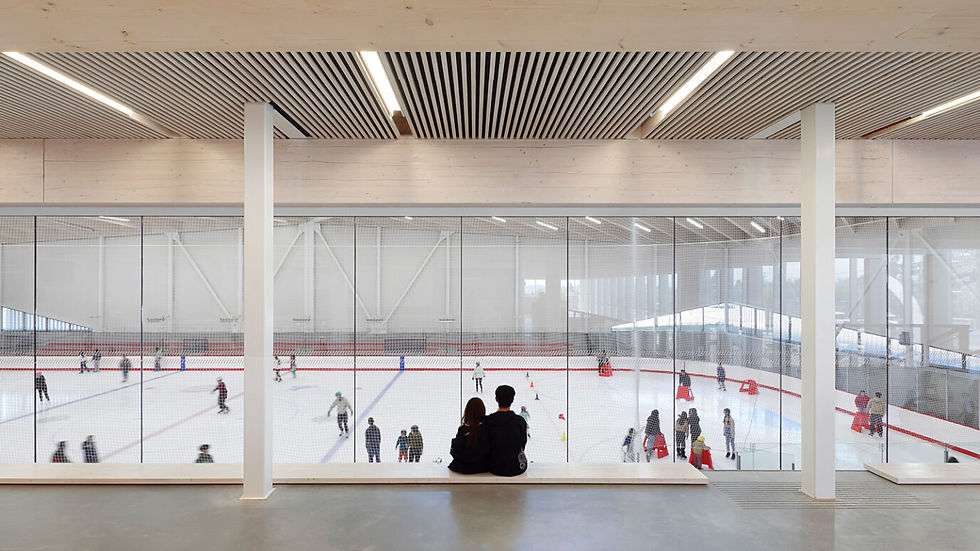
(Photo Credit: HCMA 2026)
Great Spaces, Great Impact.
The Rosemary Brown Recreation Centre is an example of what happens when a municipality aligns its functional objectives with a clear vision for community impact. The design doesn't just meet the requirements of an ice rink; it enhances the way the community interacts with the space and with each other.
At Arqtic, we believe that the impact of a well-designed space outlives the materials used to build it. When we prioritize the human experience through intentional design, we create environments where people, and communities, can grow.

Comments